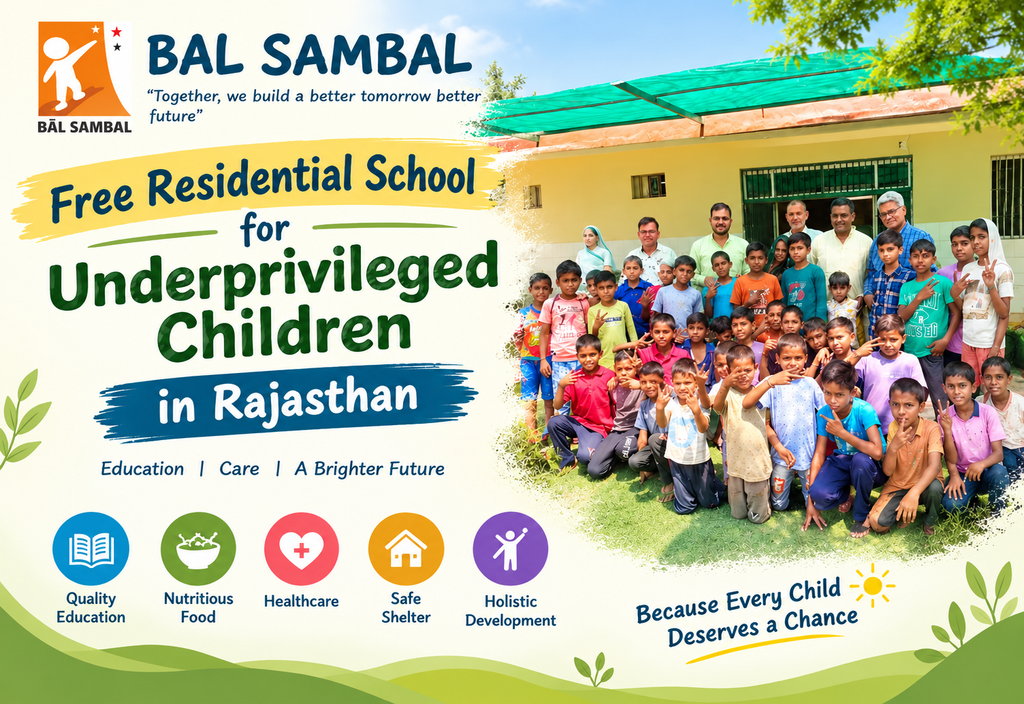
Every child deserves a safe place to grow, learn and dream about the future. But for many underprivileged children, access to quality education, proper nutrition, healthcare and a secure environment can remain a major challenge.
In Rajasthan, organizations working for child welfare play an important role in creating opportunities for children who may otherwise be deprived of them. Bal Sambal is working towards this vision by providing a caring residential environment where children can receive education, nutrition, guidance and opportunities to develop their talents.
What Is a Residential School for Underprivileged Children?
A residential school does more than provide classroom education. For children who do not have adequate family support or access to educational opportunities, it can provide a safe and nurturing environment where they can learn and grow.
At Bal Sambal, the objective is not simply to educate children but to support their overall development. The organization focuses on education, healthcare, nutrition, values, life skills and opportunities that help children become confident and responsible individuals.
Education for Underprivileged Children in Rajasthan
Education can open doors to opportunities that may otherwise remain out of reach.
For children from disadvantaged backgrounds, regular access to school, teachers, learning resources and a supportive environment can make an important difference. Bal Sambal works to bridge these educational gaps by creating an environment where children are encouraged to learn, ask questions and discover their abilities.
The aim is to help children develop not only academically but also socially and personally.
More Than a School: A Place to Call Home
For a child, education is only one part of growing up.
Children also need nutritious food, healthcare, emotional support, discipline, encouragement and a sense of belonging. Bal Sambal’s residential approach brings these aspects together in one supportive environment.
The organization describes its mission as providing children with more than basic necessities — including education, creativity, culture, ethics, social security and a home.
This holistic approach helps create an environment where children can focus on learning while also developing their individual talents and personalities.
Supporting the Talents of Every Child
Every child is different. Some may have a natural interest in academics, while others may discover their abilities through sports, arts, technology or practical skills.
Bal Sambal’s programs include activities such as carpentry, welding and machine workshops, plumbing, electrical work, painting, dance, e-learning, gardening and farming, yoga, meditation, karate and Taekwondo, along with poetry and storytelling.
Such activities can help children explore their interests and develop practical skills alongside their formal education.
Why Child Welfare and Education Must Go Together
Education becomes more meaningful when children have the basic support they need to participate in it.
A child who has access to nutritious food, healthcare, a safe environment and proper guidance is better positioned to concentrate on learning and personal development.
That is why child welfare initiatives need to look beyond textbooks and classrooms. Bal Sambal’s approach brings together education, healthcare, child protection, life skills and livelihood-oriented development as interconnected areas of child welfare.
Building a Better Future for Children
The ultimate goal of education is not only to help a child pass examinations. It is to help young people become capable, confident and responsible members of society.
Bal Sambal focuses on helping children develop knowledge, values, practical skills and a sense of civic responsibility. Its educational approach also incorporates technology, including smartboards, while encouraging children to develop their individual talents.
The organization is also working towards expanding its facilities and educational capacity, with a vision of accommodating up to 250 students.
How You Can Support Underprivileged Children
Creating better opportunities for children is a collective responsibility. Individuals, families, organizations and businesses can contribute in different ways.
You can support child welfare organizations by:
- Donate for Child Education and help support children’s education and care
- Supporting nutritious food and healthcare initiatives
- Volunteering your time or professional skills
- Supporting educational and vocational activities
- Helping spread awareness about child education
- Encouraging others to contribute to children’s welfare
Even small contributions, when combined with the efforts of a community, can help create meaningful opportunities for children.
Your support can help provide children with education, care and opportunities to build a better future.
Bal Sambal: Supporting Children, Nurturing Dreams
Bal Sambal is working to create an environment where children can receive education, care and opportunities to discover their potential.
Located in Rajasthan, Bal Sambal’s campus provides a residential environment designed around the needs and development of children. The organization aims to provide shelter, education, nutrition, guidance and opportunities that help children build a better future.
A child’s circumstances should never decide the limits of their dreams. With education, care and the right opportunities, every child deserves the chance to learn, grow and build a meaningful future.
Together, we can support education for underprivileged children and help create a brighter future for the next generation.
Also read: The Importance of Child Education for a Better Future
Support Bal Sambal
If you would like to learn more about Bal Sambal’s work, volunteer opportunities or ways to support its initiatives, visit the official Bal Sambal website and explore the organization’s programs.